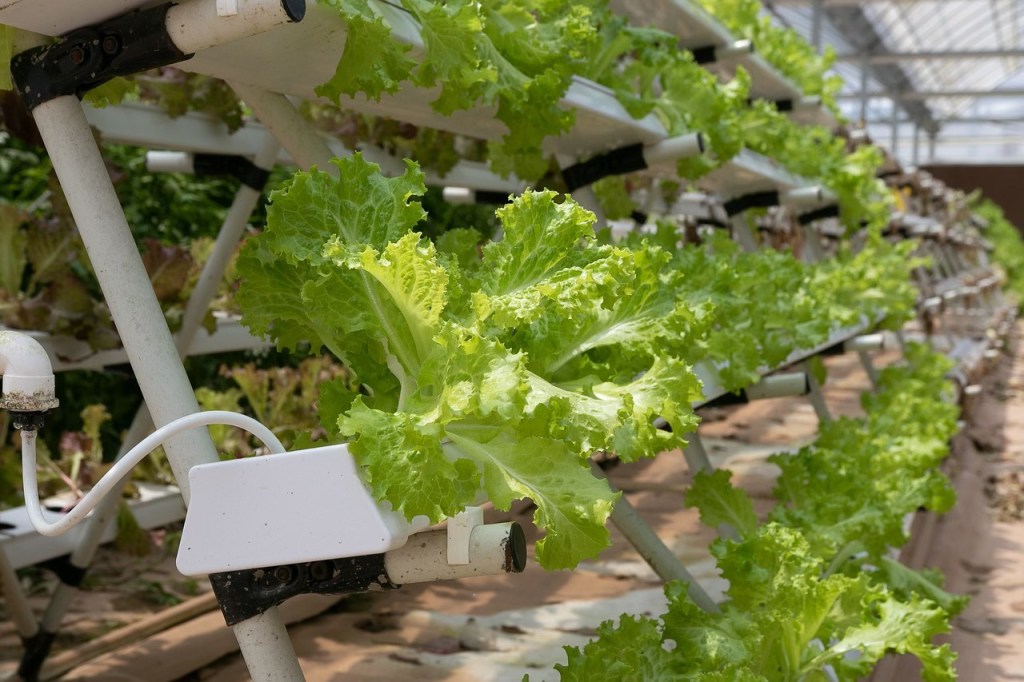
Hydroponics & Aquaponics Optimization at the Institute of Urban Farming Innovation (IUFI)
At the Institute of Urban Farming Innovation (IUFI), we are dedicated to advancing Hydroponics and Aquaponics systems to make urban agriculture more efficient, sustainable, and accessible. Our research focuses on improving these soil-free farming methods to maximize food production, reduce resource consumption, and bring fresh produce closer to urban communities.
What Are Hydroponics and Aquaponics?
- Hydroponics: A method of growing plants without soil, using nutrient-rich water solutions to deliver essential minerals directly to the roots.
- Aquaponics: A hybrid system that combines hydroponics with aquaculture (raising fish). The fish produce nutrient-rich waste that acts as a natural fertilizer for plants, while the plants help filter and clean the water for the fish.
These systems are ideal for urban environments due to their space efficiency, water conservation, and ability to produce high yields year-round.
Our Focus Areas
- Nutrient Delivery Optimization
- Developing precise nutrient solutions tailored for various crops to enhance growth and productivity.
- Researching automated nutrient monitoring systems to maintain ideal conditions and reduce manual intervention.
- Water Efficiency and Recycling
- Designing closed-loop systems that recycle water, reducing water usage by up to 90% compared to traditional soil-based farming.
- Exploring filtration technologies to ensure water purity and sustainability within aquaponic systems.
- System Design and Scalability
- Creating modular and scalable hydroponic and aquaponic systems for diverse urban applications, including homes, schools, community gardens, and commercial operations.
- Developing compact systems suitable for small apartments, balconies, and rooftop gardens.
- Crop Selection and Optimization
- Identifying crops best suited for hydroponic and aquaponic systems, such as leafy greens, herbs, strawberries, tomatoes, and peppers.
- Experimenting with plant varieties to improve yield, flavor, and nutrient content.
- Technology Integration
- Incorporating smart sensors and Internet of Things (IoT) devices to monitor water quality, pH levels, temperature, and nutrient concentrations in real-time.
- Using data analytics and automation to improve system efficiency and reduce labor.
- Sustainability in Aquaponics
- Exploring fish species that thrive in aquaponic environments, such as tilapia, catfish, and goldfish.
- Ensuring sustainable fish feed options and maintaining balanced ecosystems within aquaponic setups.
- Energy Efficiency
- Developing energy-efficient lighting solutions, such as LED grow lights, to support plant growth with minimal energy consumption.
- Researching renewable energy integration, such as solar panels, to power hydroponic and aquaponic farms sustainably.
Current Projects and Initiatives
- Community Hydroponic Farms
- Establishing hydroponic systems in urban community centers to provide fresh produce and educational opportunities for local residents.
- School-Based Aquaponics Programs
- Partnering with schools to implement aquaponic systems that teach students about sustainability, biology, and food production while supplying fresh vegetables for school meals.
- Home Hydroponic Kits
- Developing easy-to-use hydroponic kits for urban households, enabling city dwellers to grow fresh herbs and vegetables in their kitchens or balconies.
- Research on Waste Reduction
- Exploring methods to utilize organic waste from urban environments as a nutrient source for hydroponic and aquaponic systems, promoting a circular economy.
Impact of Our Work
- Increased Food Security: Bringing fresh, locally-grown produce to urban areas, especially food deserts.
- Water Conservation: Reducing water consumption through efficient, recirculating systems.
- Sustainability: Minimizing environmental impact by reducing soil use, transportation emissions, and chemical runoff.
- Community Empowerment: Providing tools, knowledge, and systems for communities to engage in sustainable food production.
- Education and Awareness: Promoting understanding of sustainable agriculture through hands-on learning and outreach programs.
At IUHFI, our Hydroponics and Aquaponics Optimization initiatives are paving the way for a future where cities are self-sufficient, resilient, and capable of producing their own healthy, sustainable food.
Join us in transforming urban spaces into thriving centers of innovation and sustainable agriculture.
 IUFI
IUFI 